
Field applications & data
Assess local applications, equipment data, video processing and selected analytics or AI inference close to the people and assets using the results.
Oil & gas
Relocatable modular infrastructure for field operations, local processing and compute near suitable on-site generation.
Scope an oil & gas assessmentExploration, appraisal and production have different operating windows. DynamicDC brings workload planning, modular infrastructure, power and cooling interfaces, connectivity and Australian delivery into one assessment.
Assess local applications, equipment data, video processing and selected analytics or AI inference close to the people and assets using the results.
Match the installation to the operating period, with equipment protection, handling, transport and recommissioning planned around the next location.
Test whether suitable on-site generation can support contracted cloud, AI or high-performance computing demand, with a defined power and network interface.
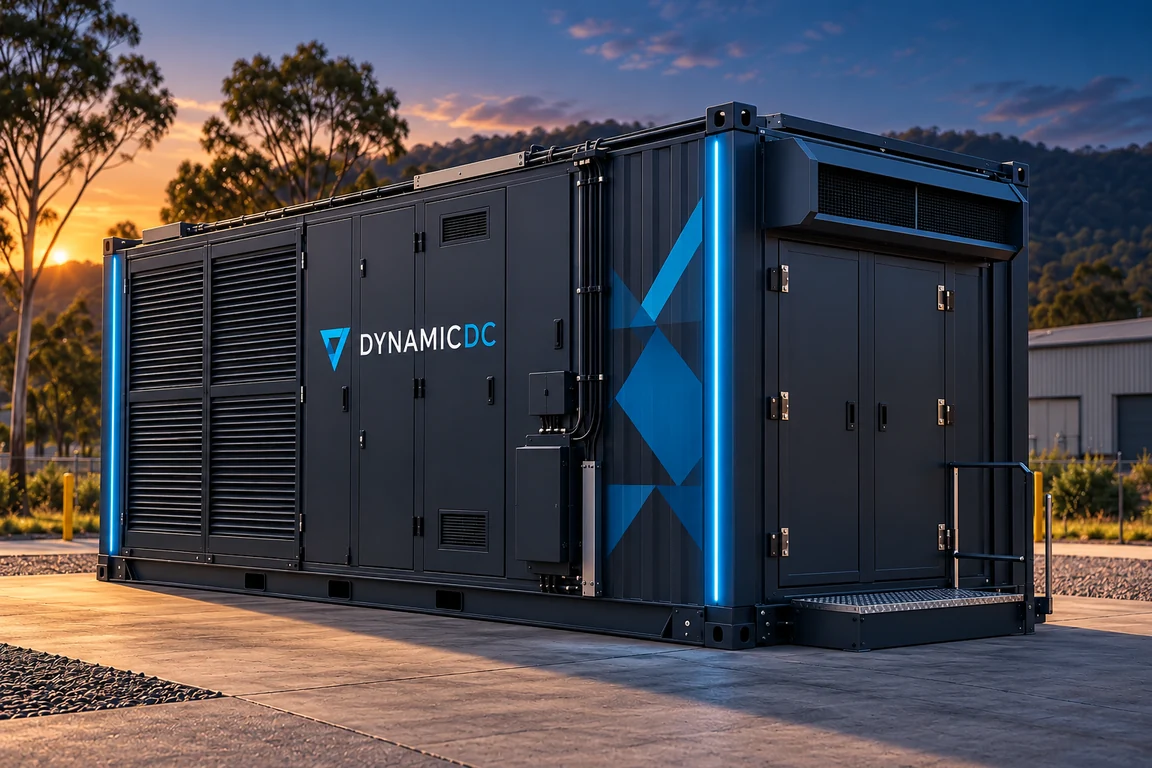
Deployable pod
A transportable modular environment for local applications, processing and campaign operations, with relocation planned into the lifecycle.
Explore our deployment systems ↗Two workload pathways
Local operating applications are assessed around site users, equipment data and continuity. They can complement existing enterprise systems and cloud services.
Cloud and AI operator capacity has a separate demand and service brief. Data transfer, latency, workload scheduling, restart requirements and customer commitments determine which jobs suit the location.
Explore the operator pathway ↗Assess fibre, terrestrial links and satellite options against bandwidth, latency, availability and data movement. Some workloads can tolerate intermittent links; others require a different location or network design.
Agree separation from operational technology, access controls, support and recovery with the asset owner. Equipment siting, hazardous-area boundaries and safety requirements belong in the site engineering brief.
A modular enclosure is one part of a relocatable deployment. The operating plan covers shutdown, data protection, disconnection, transport, site services and return-to-service testing.
Confirm the workload, site life, electrical supply, cooling, communications, access and operating support before selecting the configuration.
Monitor the environment and service, maintain recovery arrangements and review the move plan when the operating schedule changes.
Plan handling and transport limits, new site readiness, reconnection, acceptance tests and the agreed interruption to service.
Gas-to-power feasibility
Where gas-fuelled generation is proposed, assess fuel quality and availability, supply duration and variation, delivered power cost, cooling, connectivity and the compute customer requirement together.
Environmental assessment includes the project emissions boundary, generation efficiency, methane handling and the alternative use of the gas. Any emissions benefit needs project-specific evidence.
Explore energy & site opportunities ↗The selected configuration is engineered around handling, transport and site limits. The project plan defines disconnection, equipment protection, new site readiness and recommissioning, including any interruption to service.
Workload fit depends on the customer service requirement, power continuity, cooling and connectivity. The assessment distinguishes field applications from external compute demand and identifies the evidence needed for each.
Start with a non-confidential outline of the operating need, location type, site duration, available power, connectivity and timing. A scoped readiness or feasibility assessment establishes the technical fit, commercial case and next decision.
Start with the workload, site life and available infrastructure.